

From Orgia to Sabbat: Ecstasy, Suppression, and the Myth of the Witch’s Orgy
- Paul

- Nov 22, 2025
- 3 min read
Updated: Dec 4, 2025
The rites of ecstasy have worn many masks. Here is how the ancient Orgia echoed through the medieval imagination, reshaped as the Witch’s Sabbat.
I. The Dionysia and Orgia: Sacred Madness and Trance
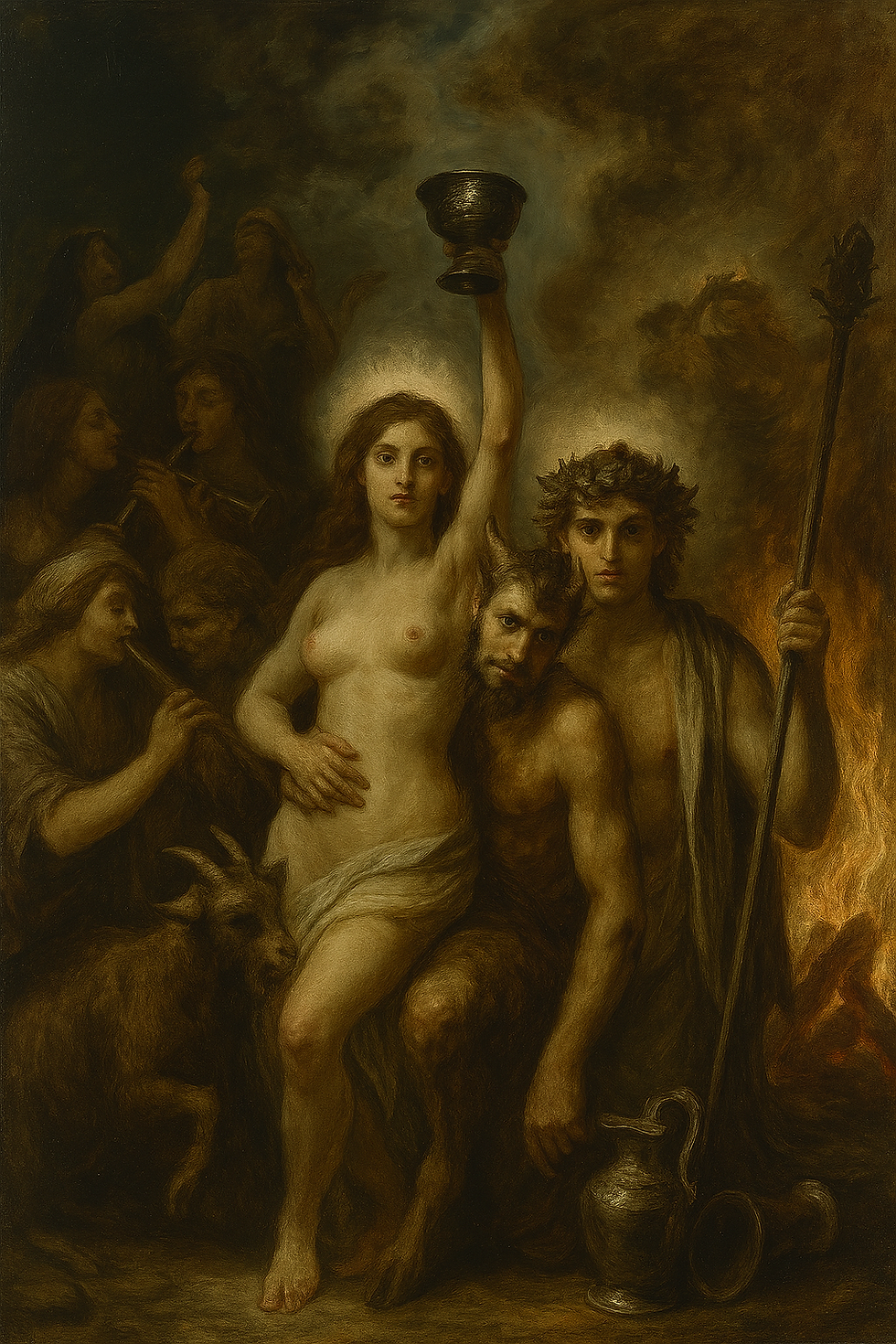
In ancient Greece, the Dionysia were public festivals honoring Dionysus—god of wine, theater, and ecstatic rebirth. They featured dramatic performances, processions, and communal celebration. But beneath the civic veneer lay the Orgia—private, ecstatic rites of divine possession.
Orgia (ὄργια) were mystery cult ceremonies involving masked dances, torchlight processions, and ritual frenzy.
Practitioners sought ekstasis—a trance state where the self dissolved and the god entered.
These rites often included omophagia (symbolic or literal consumption of raw flesh), snake handling, and wild dance, evoking Dionysus’s own dismemberment by the Titans.
The goal was not indulgence, but transcendence—a psychosomatic rupture that united celebrant and god.
II. The Bacchanalia: Roman Panic and Sexualized Suppression
When Dionysian rites reached Rome, they evolved into the Bacchanalia. Originally secret and female-led, they became more frequent and inclusive under Paculla Annia, prompting a moral panic.
In 186 BCE, the Roman Senate cracked down, citing conspiracy, sexual deviance, and ritual murder.
The testimony of Hispala Faecenia, a freedwoman and former initiate, described orgiastic rites, nocturnal gatherings, and sexual license.
These accounts—whether exaggerated or true—fueled the image of Bacchanalia as drunken, promiscuous revels, a reputation that survives in the modern word bacchanal.
III. The Witches’ Sabbat: Echoes of Ecstasy and Demonization
Medieval folklore described the Witches’ Sabbat as a nocturnal gathering of witches and demons, filled with dance, feasting, and sexual rites.
Accusations included orgies with the Devil, frenzied dancing, and madness induced by Satan.
These mirror Dionysian themes: trance, possession, and ecstatic liberation.
It is also highly plausible that witches did engage in sexual acts of pleasure—not merely as indulgence, but as a release and escape from the Church’s strict repression of sexuality. In this sense, the Devil’s promise was one of liberation and freedom from repression, offering witches a sacred space where the body itself became a vessel of resistance.
The Sabbat thus became a demonized echo of the Orgia—its sacred madness recast as heresy, its sexual liberation reframed as scandal.
IV. Modern Language and Cultural Memory
Today, orgy implies sexual excess, and bacchanal evokes drunken revelry. But these meanings are distortions of ancient rites.
The original Orgia were sacred ceremonies, not sex parties.
The Bacchanalia were rituals of ecstasy and transformation, not mere indulgence.
The Witches’ Sabbat, in folklore, absorbed these echoes—becoming a mythic survival of suppressed ecstatic traditions.
V. Conclusion: Ecstasy as Resistance
From Dionysian trance to witch’s flight, ecstatic rites have always threatened dominant order. They offer liberation through madness, knowledge through possession, and power through transgression -- Yet to dismiss every accusation of sexual rites as mere slander is to ignore the deeper truth pulsing beneath the record. Ecstatic traditions have always honored the body as a vessel of divine force, and it is entirely plausible — even likely — that Maenads, Bacchantes, and later medieval witches engaged in acts of pleasure as part of their rites. Not as corruption, but as sacrament. The Church may have twisted these practices into grotesque caricatures, yet the seed of truth remains: across ages and cultures, ecstatic worship has embraced sexuality as a path to trance, liberation, and communion with the divine. The orgy was not the myth — the distortion was. The rite itself, in all its embodied power, endures.
In the Temple of Bacchus, we reclaim this lineage—not as scandal, but as sacred fire.
⟡ Eo Evohé ⟡
©2025 Paul Reed


Comments